Deadly Polar Bear Attack Highlights Growing Threat; Record Cold Sweeps Brazil; Natural Climate Variability; + Antarctica Back Below -70C (-94F)
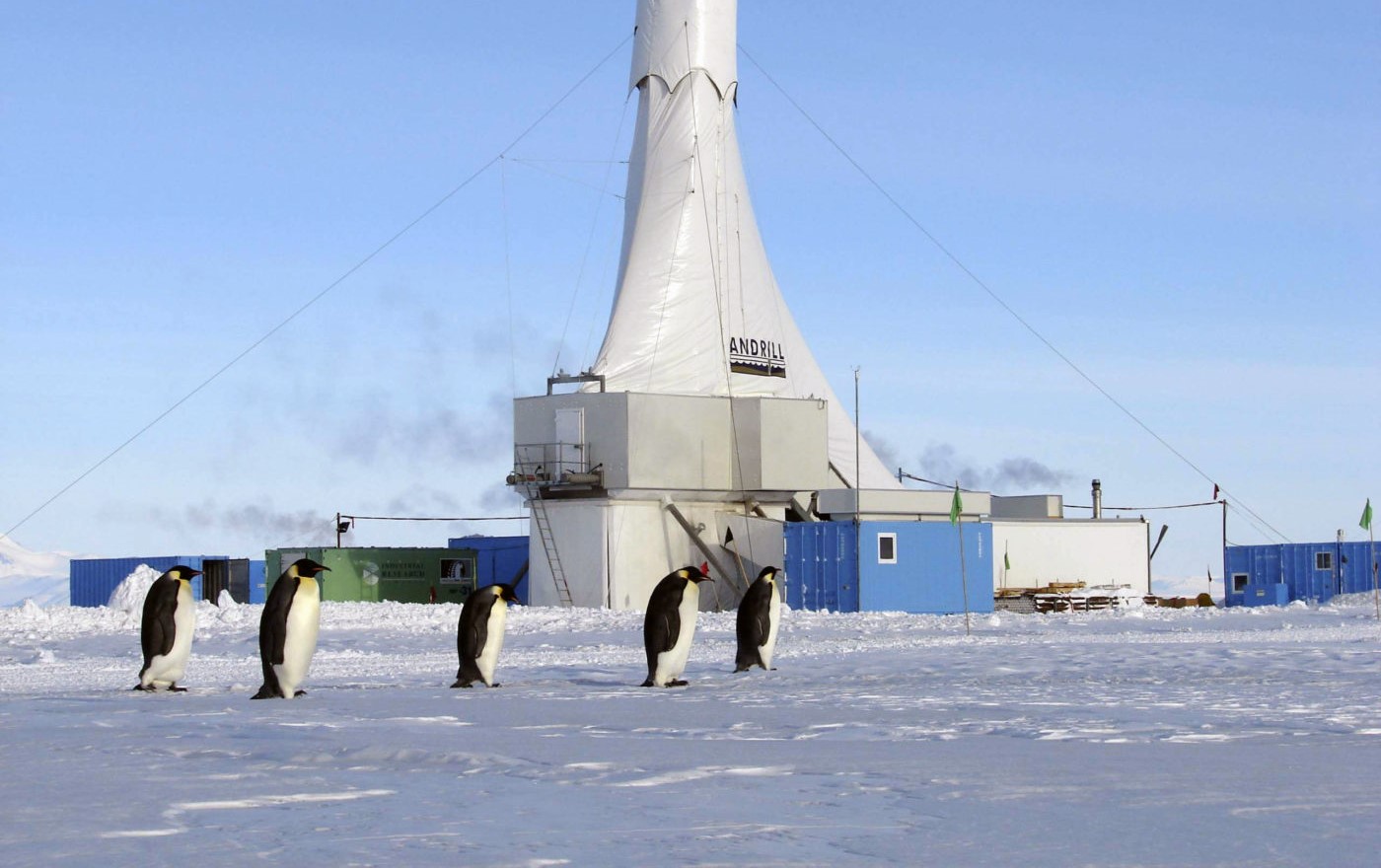
While the recent warm anomalies helped forward The Narrative, the overall trend on Antarctica remains one of inconvenience: cooling temperatures and expanding ice.
 Unlock with Patreon
There was massive global warming ,starting 18 thousand years ago.
The comet strike took us back to co!d.
But why did most of the comet fragments hit such thick ice over Canada. There had been strong warming for 5 thousand years.
The answer is that 13 thousand years ago the North Pole was Hudson Bay.
100F in Brazil today, fire danger extreme. No rainfall forecast in that large area. Hot from solar flares, major geomag storm, Northern lights down to Texas. Two cyclones S South American one bringing cold air up , same pattern as last week.
https://www.windy.com/-Temperature-temp?temp,-8.573,-54.144,6,i:pressure,m:dppaeP6
https://www.windy.com/-Fire-spread-fwi?fwi,-12.197,-49.482,6,i:pressure,m:doLaeP5
https://www.windy.com/-Rain-accumulation-rainAccu?rainAccu,next10d,-16.486,-51.454,5,i:pressure,m:doLaeP5
https://www.windy.com/-Pressure-pressure?pressure,-37.140,-59.786,4,i:pressure,m:2ZadFf
https://spaceweathergallery2.com/index.php?title=aurora
https://www.swpc.noaa.gov/products/planetary-k-index
Big mag spike from the solar flares, cosmic rays lowered:
https://firebasestorage.googleapis.com/v0/b/carrington-9.appspot.com/o/spaceWeatherNews%2Fgoes_mag.png?alt=media
https://cosmicrays.oulu.fi/
88F up at Hudson Bay today and tomorrow. Heat waves have been going up into the Arctic all Summer from solar flares.
https://www.windy.com/-Temperature-temp?temp,2024081321,57.675,-85.588,5,i:pressure,m:fe0adGr
https://www.windy.com/-Drought-intensity-drought40?drought40,2024082000,59.182,-89.270,5,i:pressure,m:feIadDr
ARTICLE: Huge Increase in Coral Produces Third Year of Record Highs on the Great Barrier Reef
https://dailysceptic.org/2024/08/09/huge-increase-in-coral-produces-third-year-of-record-highs-on-the-great-barrier-reef/
Massive increases in coral across the Australian Great Barrier Reef (GBR) have been reported for 2023-24 making it the third record year in a row of heavy growth. Across almost all parts of the 1,500 mile long reef, from the warmer northern waters to the cooler conditions in the south, coral is now at its highest level since detailed observations began. The inconvenient news has been ignored in mainstream media which, curiously, have focused on a non-story in Nature that claimed “climate change” poses an “existential threat” to the GBR…
I went North today to the river to see if there’s any salmon yet. They are supposed to show up this week by the thousands through the rest of the month into September. There is a salmon hatchery there on the river. I did not see one salmon. Now? Not now.
Last week I stopped by the salmon hatchery to the South where there should be thousands of King salmons returning right now. There’s a few but not like it was before 2016 record hot El Nino. Nothing like it was and it’s been another hot dry Summer. Record hot/dry last three Summers here in the rainiest part of the US. Snowpack here was zero percent of normal before Summer from solar flares.
https://www.spaceweather.com/images2024/12aug24/TCI_Daily_NO_Power_Percentiles.png
Well, I was on the other side of the El Niño, and July was wet. In Houston, there was 10.32″ of rain, s significantly above the normal 3.39″ .
And due to cloud cover that accompanied all that rain, Houston also had lower than average temperatures for July.
It all depended on which side of the Jet Stream you were on—the dry side or the wet side.
A new study shows that human CO2 in the atmosphere is about the same as during the Little Ice Age, about 4 percent of the total.
https://www.mdpi.com/2413-4155/6/1/17
‘Net Isotopic Signature of Atmospheric CO2 Sources and Sinks: No Change since the Little Ice Age’
by Demetris KoutsoyiannisORCID
Department of Water Resources and Environmental Engineering, School of Civil Engineering, National Technical University of Athens, Heroon Polytechneiou 5, 157 72 Zographou, Greece
Sci 2024, 6(1), 17; https://doi.org/10.3390/sci6010017
Submission received: 19 December 2023 / Revised: 23 February 2024 / Accepted: 29 February 2024 / Published: 14 March 2024
Abstract
Recent studies have provided evidence, based on analyses of instrumental measurements of the last seven decades, for a unidirectional, potentially causal link between temperature as the cause and carbon dioxide concentration ([CO2]) as the effect. In the most recent study, this finding was supported by analysing the carbon cycle and showing that the natural [CO2] changes due to temperature rise are far larger (by a factor > 3) than human emissions, while the latter are no larger than 4% of the total. Here, we provide additional support for these findings by examining the signatures of the stable carbon isotopes, 12 and 13. Examining isotopic data in four important observation sites, we show that the standard metric δ13C is consistent with an input isotopic signature that is stable over the entire period of observations (>40 years), i.e., not affected by increases in human CO2 emissions. In addition, proxy data covering the period after 1500 AD also show stable behaviour. These findings confirm the major role of the biosphere in the carbon cycle and a non-discernible signature of humans.
Can someone explain to me what is causing the heatwave in Antartica? I herd that it is from a polar vortex split from the warming stratosphere which is causing warm winter weather in Australia. What I would like to know is what caused the warming of the stratosphere? Was it from an active sun or the water vapour from Tonga eruption? Why did this stratosphere warming happen in August but not in June or July?
Also the bom said that the stratosphere warming over Antartica is a possible warning for an hot summer the problem is that La Niña meant to develop. will La Niña be halted? or will La Niña develop and override the stratosphere warming effect or will they both form together each amplifying each other’s effects? Also how long will the warm winter weather continue for in Australia. Will it last until the end of August or will it reverse and go back to the cold winter Australia been experiencing for the past two months?
Austin had one of the best July temperatures most of us here can ever remember. After last year’s flaming hot summer, it was welcome! Amazingly, it’s green here in August.
Watched the Perseids from a ranch last night. Didn’t see nearly as many as hoped for, but being able to seen stars and the Milky Way made the trip worth every minute spent.